A useful private-label inquiry gives the manufacturer enough information to discuss the actual product and packaging. Before requesting a quotation, bring the product choice, quantities and branding requirements together in one brief. The following five steps follow the order in which a LOKNZW branding project is discussed.
1. Choose the lash product and the order configuration
Start with the product your brand intends to sell: professional lash extensions and DIY lash clusters need separate specifications. Attach a selected product reference or a clearly labeled photograph. A broad description such as “natural lashes” is not enough to identify the product.
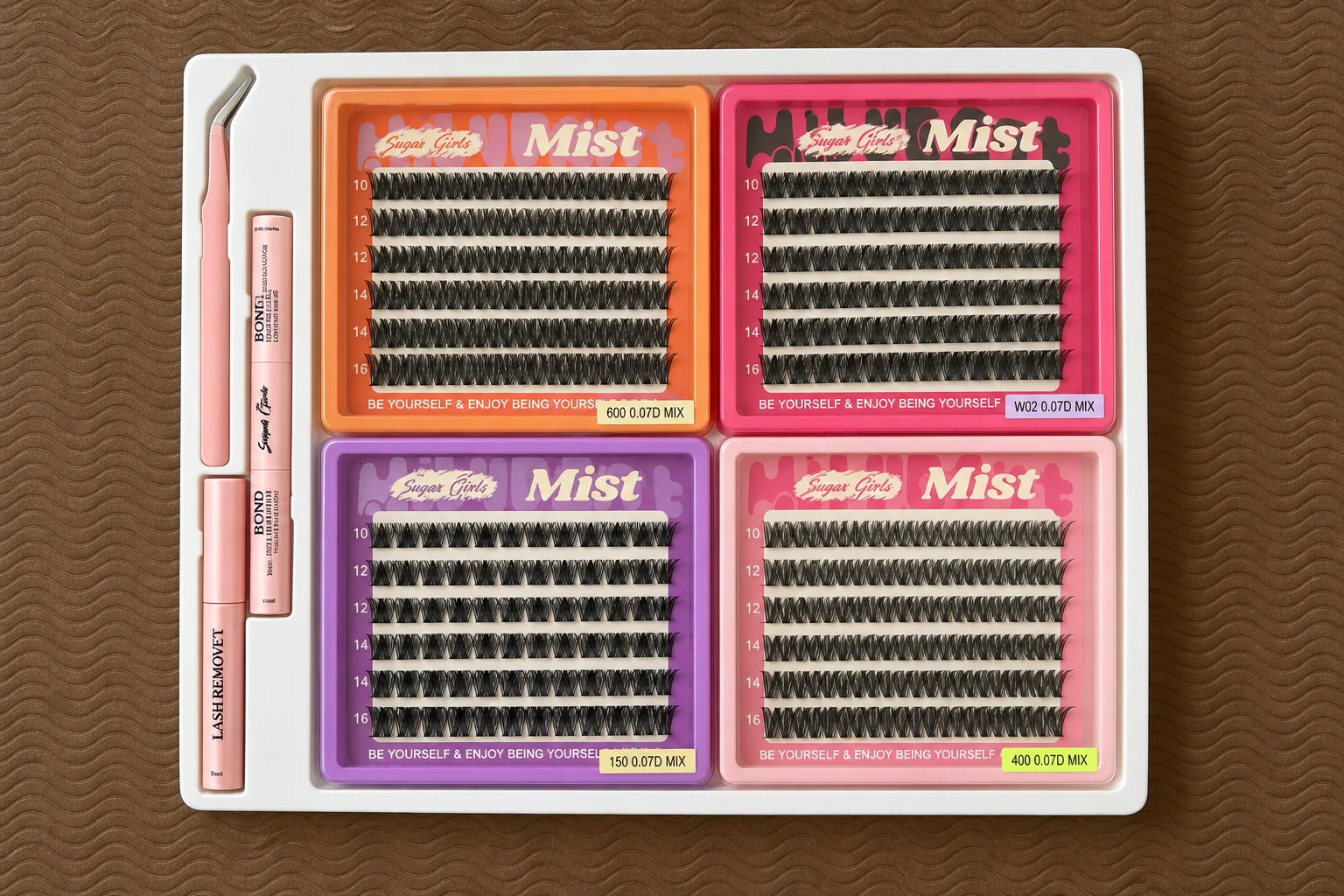
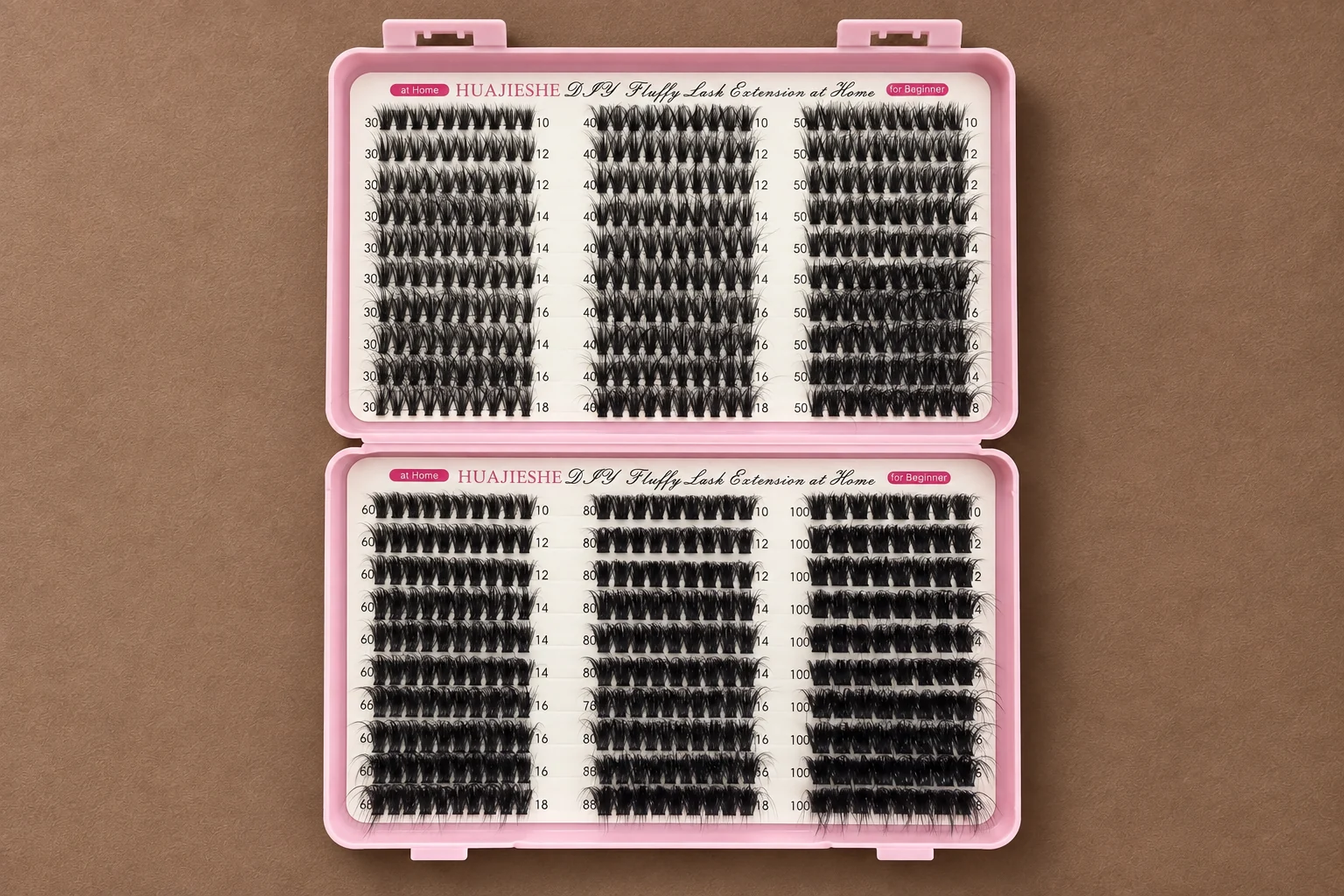
Record the requested style, curl, length arrangement and quantity for each item. For a mixed tray, describe what should be mixed and how the rows or sections should be arranged. A mixed-length tray and a tray combining different cluster styles are different requests; your brief should make that distinction clear.
If some choices are still open, list them as questions. The purpose of the first inquiry is to agree on a workable configuration, rather than to guess every production detail yourself.
- Product group and selected style or reference.
- Requested specifications and tray arrangement.
- Estimated quantity for each configuration.
2. Define which packaging items need your brand
Specify where your brand should appear. The packaging box, printed insert card and lash tray are separate items. For projects that include accessories, branding requirements for glue bottles and tweezers can also be discussed. Confirm what is included in your particular order.
If you already have a preferred box, provide photographs or a packaging reference and describe the parts you want to keep. If the box has not been selected, explain the product configuration it needs to hold. This gives the packaging discussion a clear starting point.
Treat a packaging photograph as a reference for the discussion. The agreed product, artwork and order details should define what will be produced.
4. Confirm the design and decide whether to request a physical sample
Review the design against your brief: product names, brand spelling, packaging wording, layout and the items included. Keep a clearly identified approved version so that subsequent changes are easy to distinguish.
After the brand artwork and order arrangements are confirmed, a project can proceed to production or include a physical sample first, according to the decisions the customer needs to make. Confirm the sample scope and cost before it is prepared.
Ask for written confirmation of sample availability, what the sample includes, sample or customization fees, and shipping costs before preparation. Costs and timing are confirmed for the selected product and project; a catalog image does not establish current stock or a free-sample entitlement.
5. Confirm the production, packing and delivery arrangements
Before production, bring the approved product specification, tray configuration, packaging design and quantities together in the order confirmation. If anything changes after approval, identify the change explicitly and agree on its effect on the order.
The production and packing discussion should also cover the presentation you expect when the trays are boxed. Review the agreed configuration again when checking the finished product, rather than relying on a general statement that the order looks correct.
Keep the final specification and artwork together for future orders. If a later order uses a different mix, style or packaging design, give that version its own clear description.
Copyable checklist: your private-label inquiry
Use these fields for your first message. Mark an undecided item as a question so it can be discussed; you do not need to invent a specification to complete the brief.
- Product family and style reference: [name, code or attached photograph].
- Requested specifications and tray layout: [details or open questions].
- Quantity for each configuration: [number of trays or packages].
- Items needing branding: [box, insert card, tray or agreed accessories].
- Brand files and packaging references: [file names and version].
- Sample requirement: [what the sample needs to demonstrate, scope and cost to confirm].
- Destination, target date and questions: [details to confirm in the quotation].
Keep buyer requests separate from confirmed order details
Use the private-label project process to organize the handover. A request becomes an order detail only when the corresponding product, artwork or quotation has been confirmed. Keep undecided items visible.
| Decision | Buyer supplies | Confirmation to keep |
|---|---|---|
| Product and quantity | Selected reference, requested configuration and quantity per item | Confirmed specifications, quantity unit and applicable minimum for each configuration |
| Branding and packaging | Files you have permission to use, required wording and packaging reference | Approved artwork version, included components and any sample scope |
| Cost and delivery | Destination and target date | Itemized quotation, fees, schedule and the conditions that start production |
Your next step
A clear first inquiry includes your selected lash product, specifications, quantities, packaging requirements, brand files and destination. Send the open questions with the brief so they can be resolved before the order is confirmed.