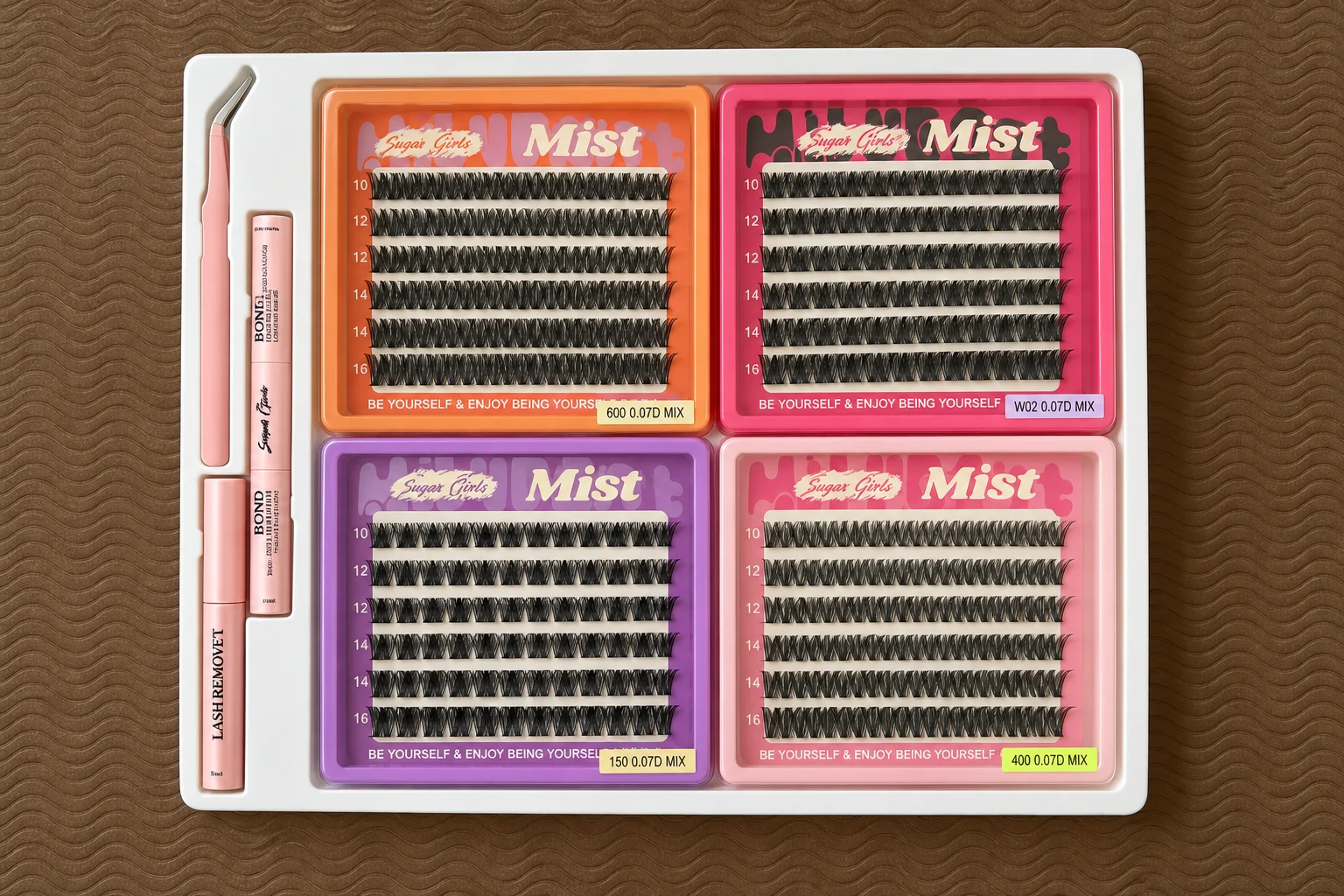
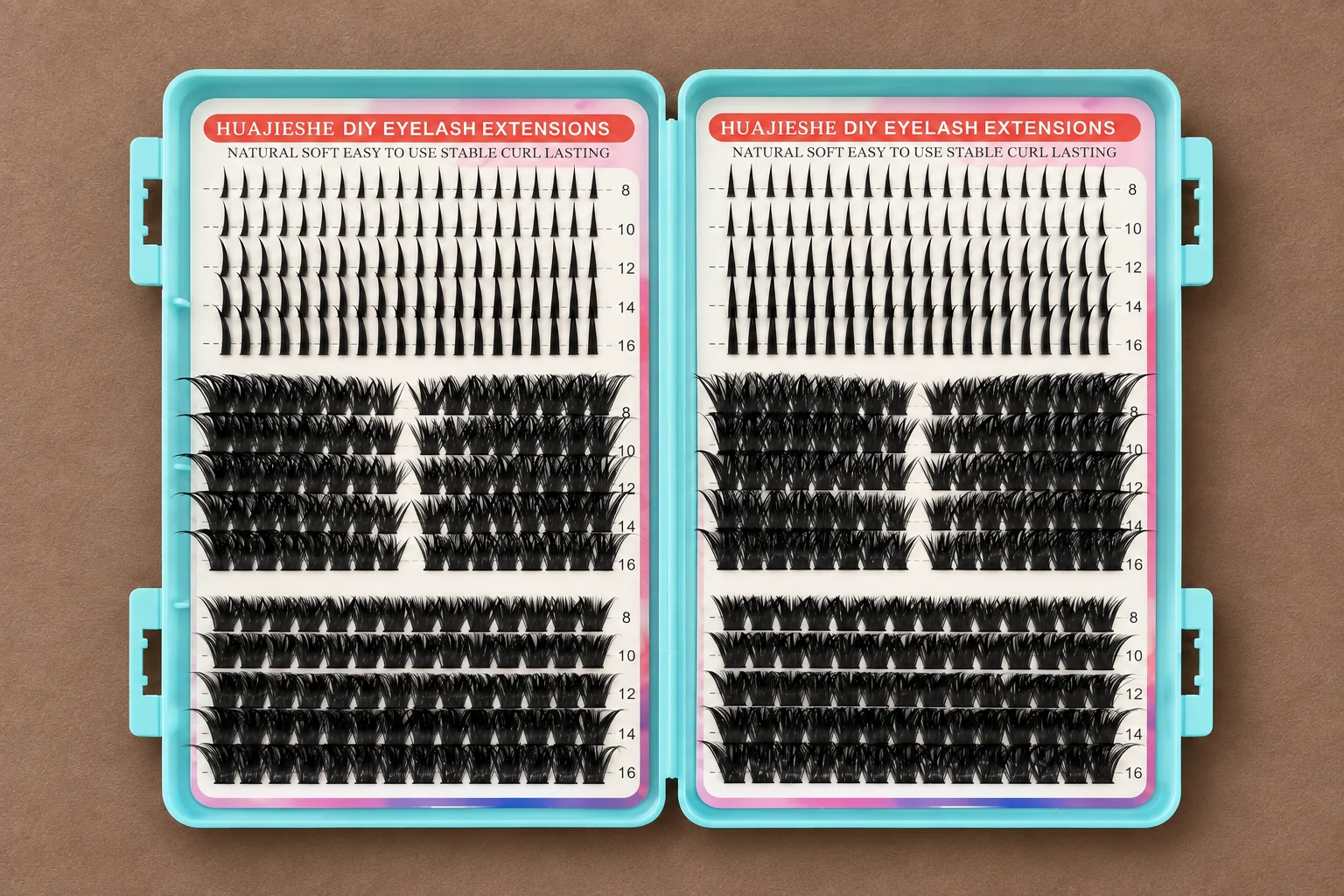
“Mixed tray” can describe more than one product arrangement. It may mean a selection of lengths, a combination of cluster styles, or several D specifications in one package. Describe each choice separately so the product reference and the order request tell the same story.
Start with a style reference
Choose the intended product from the DIY lash cluster range or attach a clearly labeled reference. Keep the product reference with your tray plan so shape, appearance and layout can be discussed together. A reference image is a selection aid, not proof that every pictured combination is available.
Do not rely on the D label alone to communicate the whole product. The label belongs in the specification, but the selected style and its appearance also need to be identified.
Record the D specifications you want to combine
Copy the D specification from the selected product reference and identify which sections should use it. Ask the supplier to confirm the meaning of the label and the feasible combination for that product; a D label alone does not establish style, length, count or availability.
A product photograph may show one example of a mixed package. Describe your own preferred combination rather than assuming every pictured arrangement is the same order configuration.
Specify the length arrangement and curl
Write the requested lengths for each row or section, and leave undecided lengths as questions. The feasible length range, curl and combinations must be confirmed for the selected product; do not treat a catalog example as a stock list or a promise that every combination can be supplied.
Specify the requested curl as a separate field. If you are using a physical reference, send a clear side view with its label. Keep length and curl requests distinct so neither is inferred from a front-view photograph.
Show how the tray should be arranged
A simple annotated photograph or sketch can explain a mixed tray more clearly than a long message. Label each section with the requested style, D specification and length arrangement. Include the intended number of trays or packages for that configuration.
If the total count per package matters to your range, state it in the brief and have it confirmed. The count shown in a sample photograph describes that example; it should not silently become the specification for a different mixed tray.
Check the proposal against one complete reference
When you receive the proposed configuration, compare it with the same reference document: style, D specifications, lengths, curl, section layout and packaging. Resolve any differences before the final order is confirmed.
For a branded range, carry the approved product configuration into the packaging discussion. Product and packaging choices should be reviewed together when they affect how the mixed selection is presented.
- Selected style or product reference.
- D specifications and length arrangement.
- Requested curl and section layout.
- Packaging requirements and estimated quantities.
Copyable checklist: your mixed-tray brief
Use one set of fields for each tray configuration. Attach a labeled image or sketch if you have one; the requested combination remains subject to confirmation.
- Style reference: [product name, code or attached image].
- D specifications: [which options belong in this tray].
- Length arrangement and curl: [requested arrangement or custom-length requirement].
- Section layout: [which style and specification goes in each section].
- Count per package and order quantity: [requested counts to confirm].
- Packaging and branding: [existing packaging or private-label requirements].
| Tray-plan field | What to attach or record |
|---|---|
| Each row or section | Its label, selected style reference, requested D specification, length and curl |
| Contents versus order quantity | Count inside one package separately from the number of packages requested |
| Supplier response | Confirmed options, changes needed, minimum per configuration, sample fees and timing to confirm |
Once the layout is agreed, record packaging changes through the private-label process. If you want several separately packed products in the same purchase, use the wholesale order process; that is different from mixing products inside one tray.
Your next step
Describe the product and the mix separately. A labeled tray reference, supported by the requested specifications and quantities, gives the manufacturer a useful starting point for a detailed proposal.